
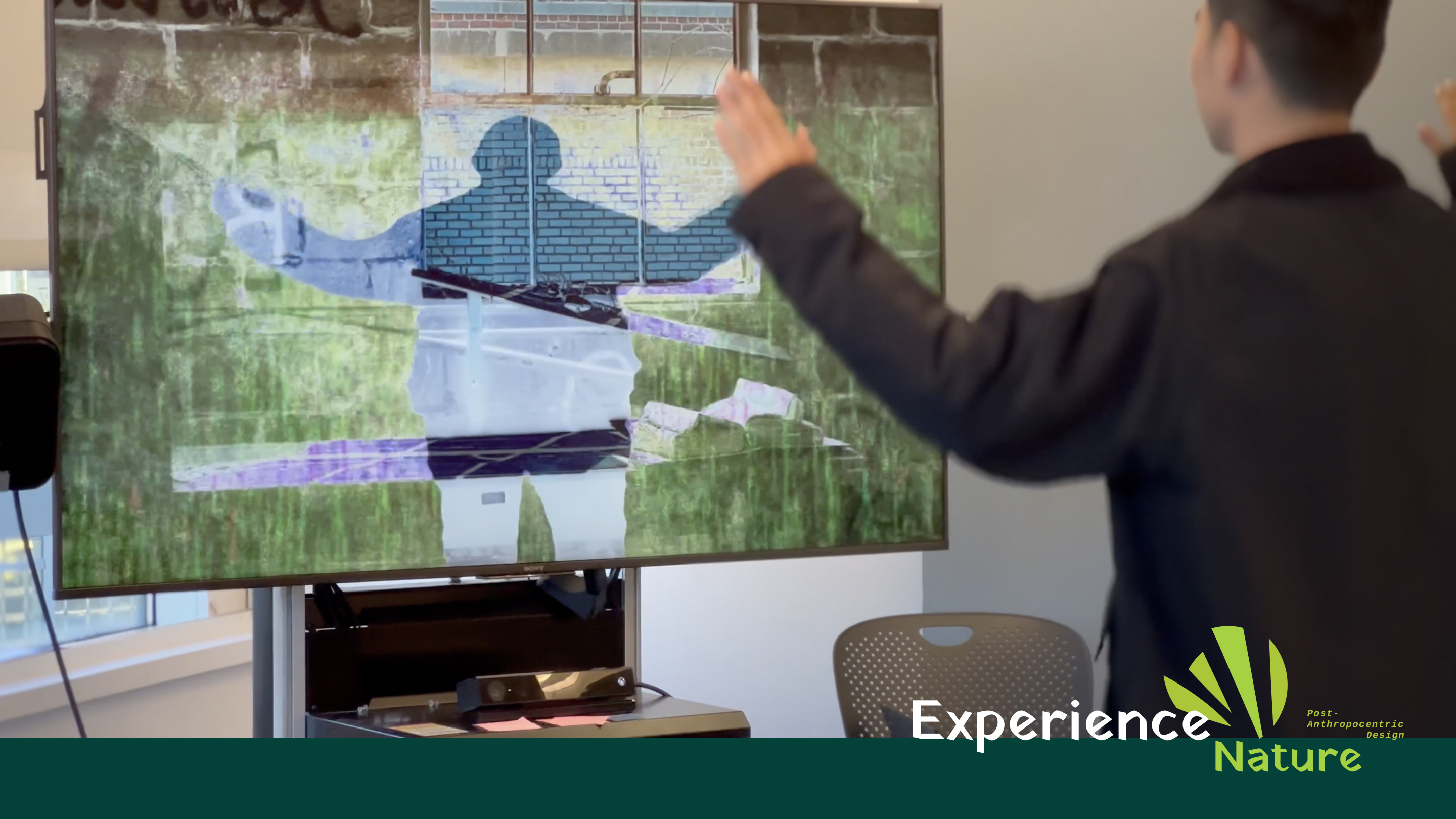
It is common to see abandoned architecture in modern society. Many factories and residential properties are exposed to nature without human maintenance. According to a survey, from 1997 to 2003, there has been a 26% decrease in the number of abandoned commercial/mixed-use buildings in Boston. Redesigning abandoned buildings and designing sustainable buildings for the future has always been a concern for today’s architects. Unlike natural landscapes, the “buildings” we are referring to are entirely human-made landscapes, which are places of human activity.
Mountains and rivers are beautiful scenery, and the night scenes in the city are landscapes. However, why do we define an abandoned building as a “ruin”? Just imagine what will happen when humans are not using a building and human activities do not disturb that building. Nature will be the protagonist, starting with the moss, then the weeds, and animals will use the building as a shelter; nature is restoring the building with its power. From a non-human perspective, the abandoned building is not a “ruin” but a naturally restored human landscape.
How shall we define abandoned buildings? There are different answers in the human-dominated world versus the non-human-dominated world.
Abstract
Whether it is eco-sustainable buildings using sustainable and recycled construction materials, the fourth-generation green buildings designed with a lot of green plants growing on them, or the reuse of abandoned spaces to reduce labor and environmental pollution, these are the world we see from our human perspective, we are always the protagonist of the stories. Would it be different if we could evaluate the world differently? How would nature exist in the world after humans evacuate from the scenario?
Returning the dominance to the nature we have ignored for a long time will show the audience an unprecedented experience with the understanding of the relationship between their existence and the world.
Project Introduction
Our team aims to create an interactive speculative art installation, providing an immersive experience. This project intends to make the audience participate and immerse themselves into a scenario of an abandoned infrastructure by using surrounding animations. The actions and movements of the audience would act as a disruptive element, an “interloper” in the scenario. The goal is to inspire users’ feelings and reflections about the post-anthropocentric nature. The audience may follow this immersive interaction to re-examine their identity in the world.


Research
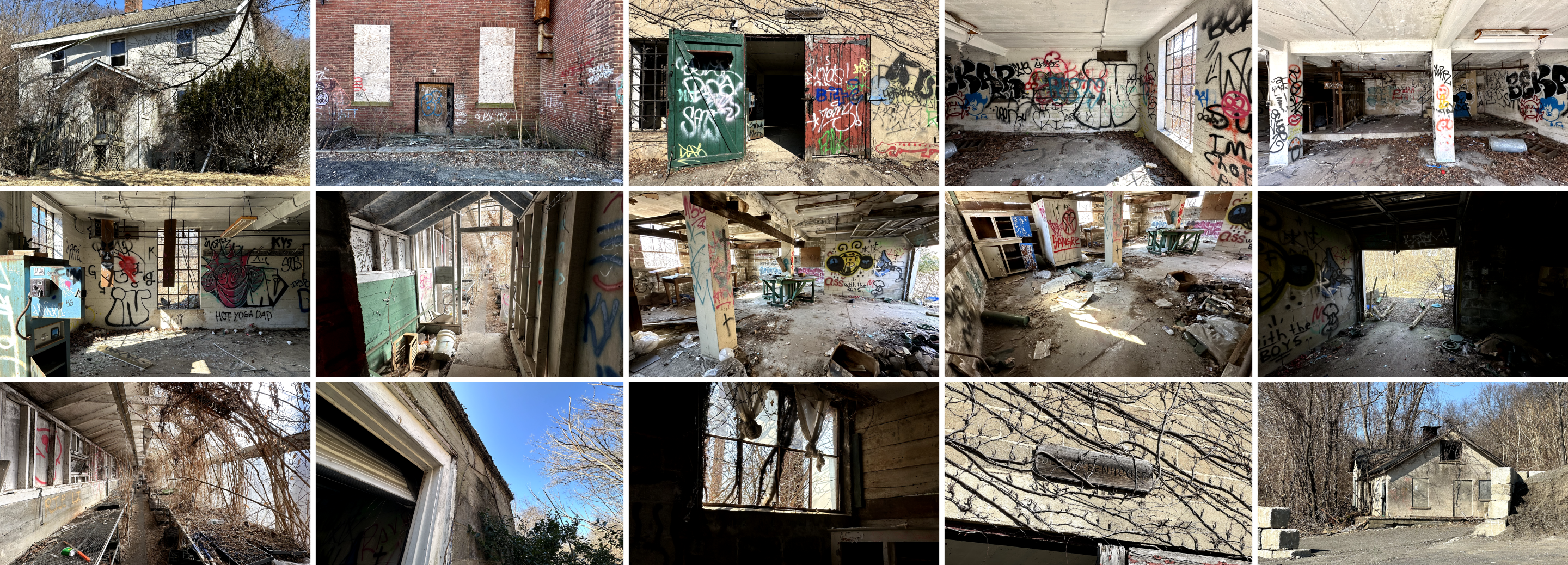
Our team conducted field research on abandoned architecture in the Walter E. Fernald Developmental Center, an abandoned area near Boston, to analyze the habitat without human interference.

Ideate
We use the Kinect sensor and any projector to make an interactive projector screen. Users can play as a part of the abandoned architecture. There will be green plants growing or animal crossing around the user. If the user makes any actions or movements, the natural aspect would be demolished.
The Exhibition Experience Design


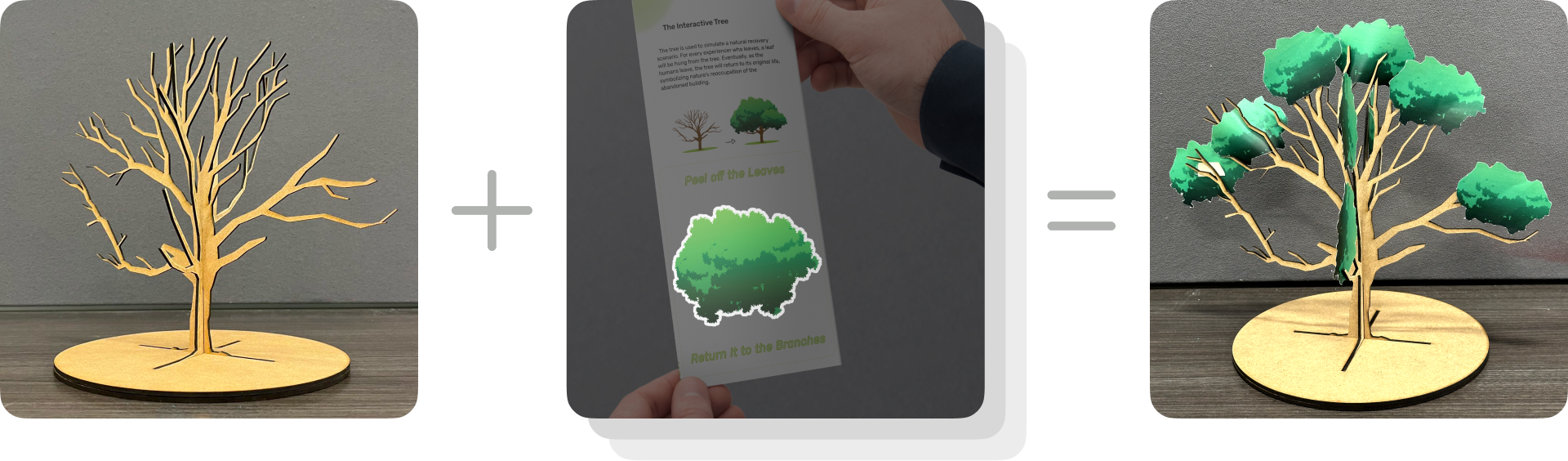
The path of the experience is carefully designed. A brochure is obtained at the entrance, after which one can view on-screen footage of an abandoned building with no interference, to contrast it with the footage of those who will later participate in it. After reading the intro, they enter an interactive area where the Kinect in the Reserved Area detects movement and transmits it to a computer that renders the video footage in real-time, creating an interactive effect. Before leaving, the experiencer can remove a leaf from the brochure and hang it on the tree, simulating a scenario in which humans leave to help nature recover.
Prototype
The Interactive Video
At the very beginning, we used Adobe After Effects to simulate the growth animation as an initial sample.

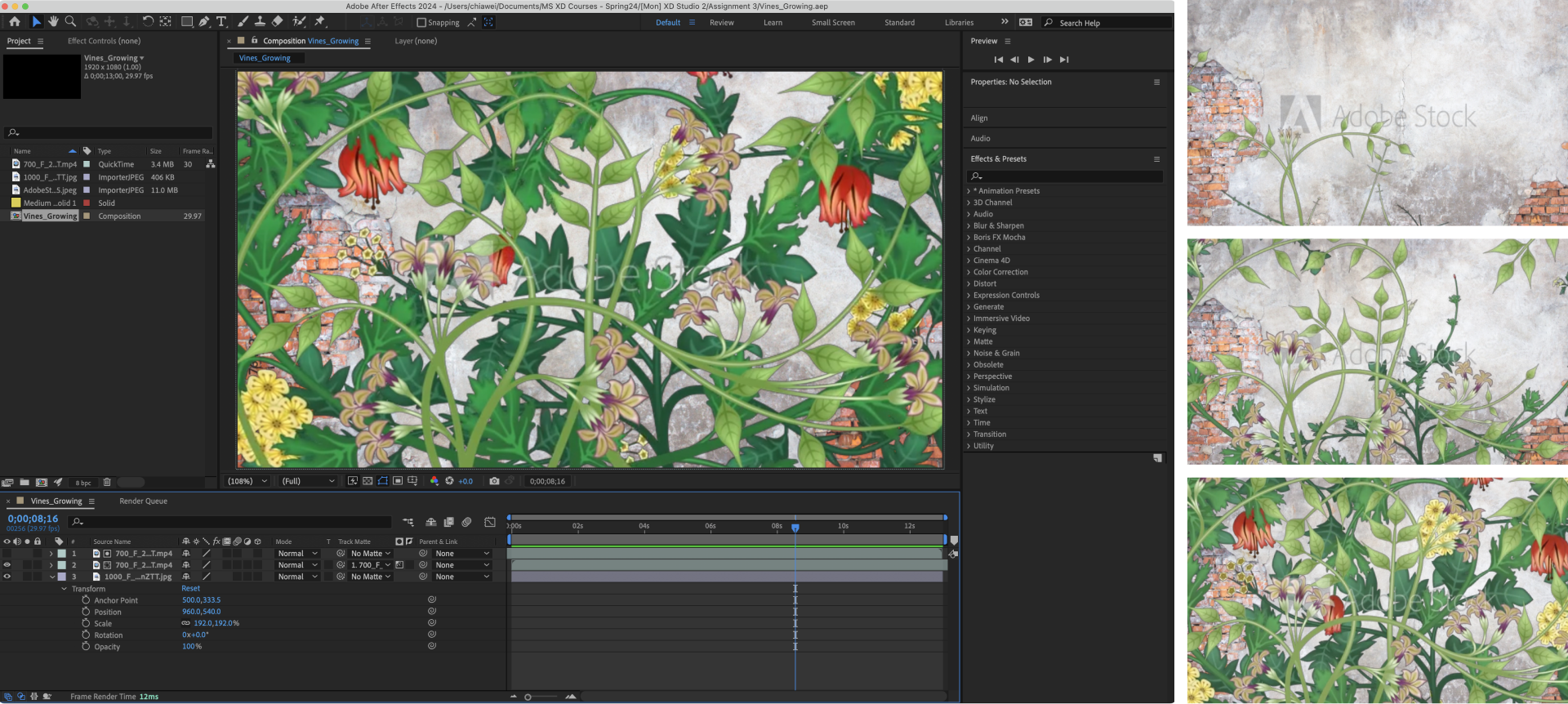
Later, we tried to learn the TouchDesigner software and used it to design the interactive experience video.

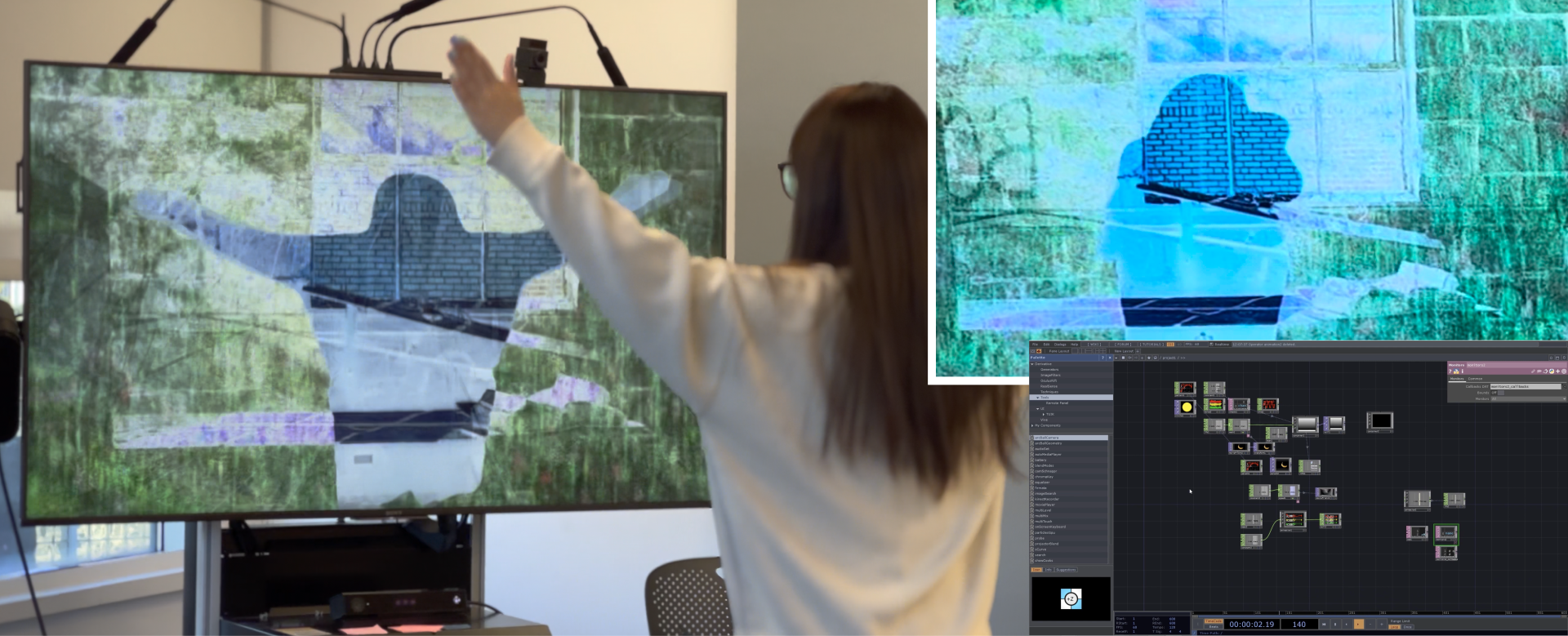
Here, Kinect detects human movement more accurately than a camera. In an unoccupied area, green plants are growing unchecked, while within the area of the human body, the green plants will disappear and the appearance of the abandoned building will be presented.


The Brochure
The brochure has a portable folding design and is picked up at the beginning of the experience when the experiencer enters the exhibition area.

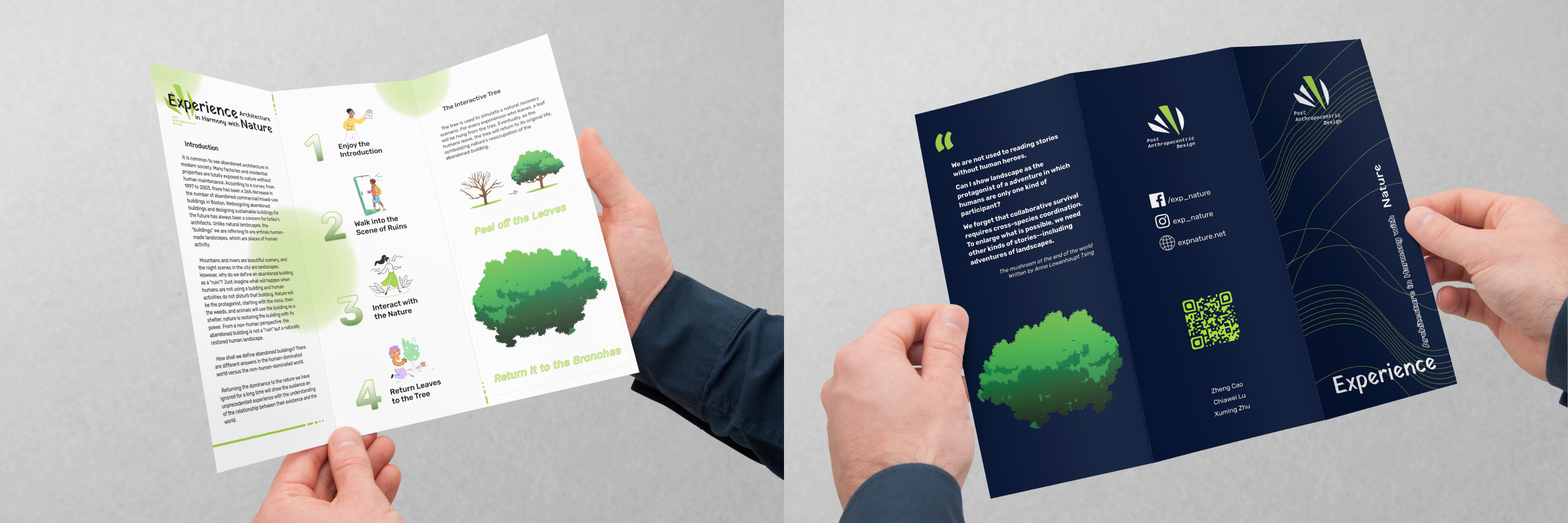
In addition to an introduction and on-site orientation information, the back cover features a very prominent leaf that can be easily removed so that it can be hung on the Interactive Tree before leaving.
The Interactive Tree
The tree is used to simulate a natural recovery scenario. For every experiencer who leaves, a leaf will be hung from the tree. Eventually, as the humans leave, the tree will return to its original life, symbolizing nature’s reoccupation of the abandoned building.

Test
We connected the computer to the TV via HDMI to simulate the immersive effect of a projected screen. The Kinect, which was connected to the computer, was placed in front of the TV and transmitted the captured body movements to the TouchDesigner software on the computer, which rendered the image in real time and projected it onto the TV screen.

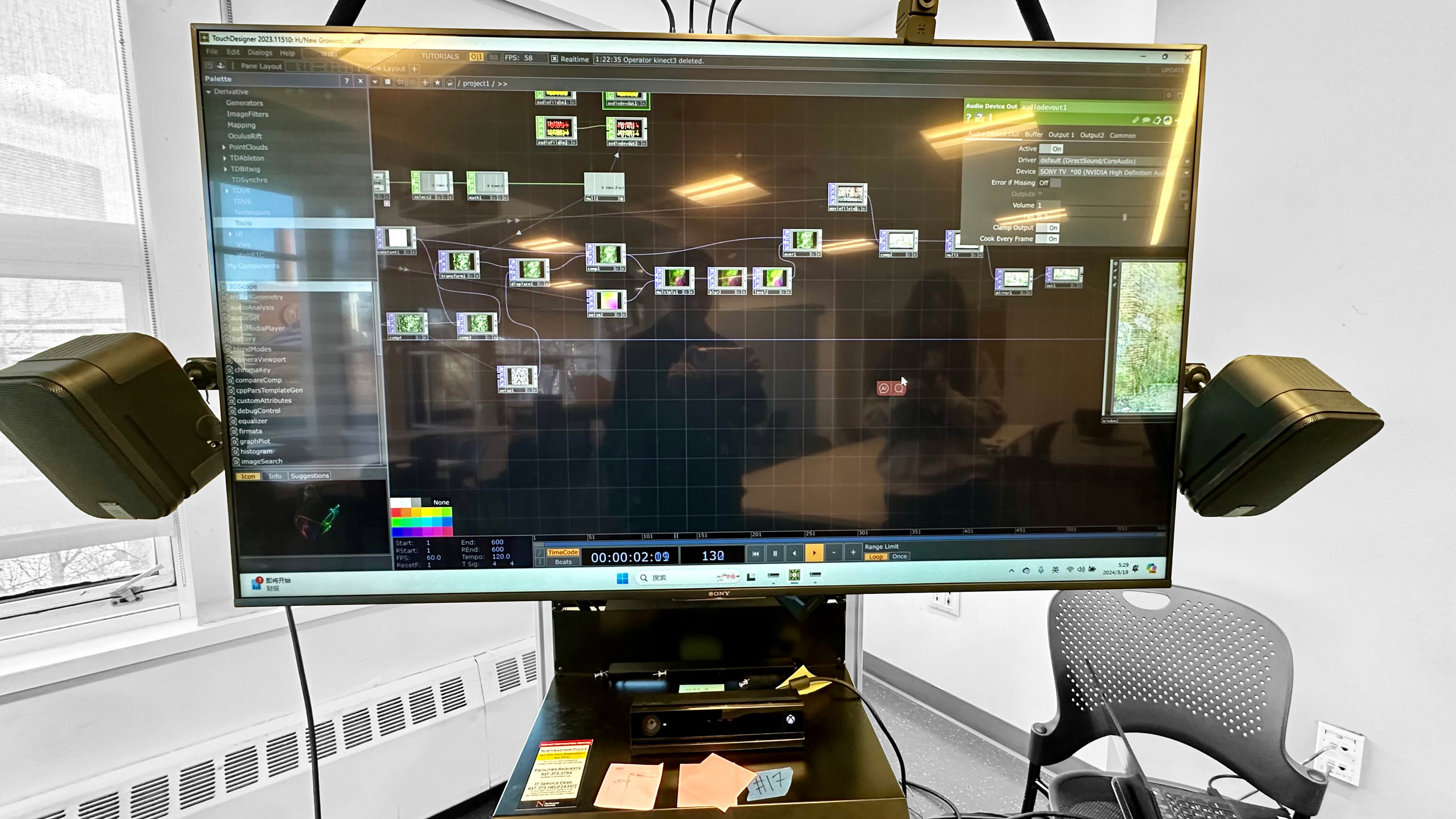
When an experiencer enters the Kinect’s recognition zone (the space in front of the TV screen), they can interact with it instantly.
Our group ended up demonstrating this project in class. The professor and guests, as well as many of our peers, tried to experience the interactive video. We had a discussion session after the demo to talk about how we could further upgrade the current program into a more immersive experience.
By handing out brochures to everyone in the room, everyone ended up collaborating to bring the Interactive Tree to life. Thank you to everyone who participated! And thank you to my teammates for creating this fun and inspiring experience together.
Reference
Ferrando, F. (2016). The party of the Anthropocene: Post-humanism, environmentalism, and the post-anthropocentric paradigm shift. Rel.: Beyond Anthropocentrism, 4, 159.