
Therapy Booking, Rebuilt for Clarity and Conversion
Led the redesign and front-end coding for a Harvard-founded U.S. mental health platform—achieving a 108% lift in therapist booking clicks through user-centered, API-integrated systems.
Stage: Early-stage startup
Role: Founding Product Designer, also responsible for front-end development
Team: 1 Product Manager, 2 Backend Engineers
Year: 2024
What guided the redesign wasn’t instinct. It was evidence, and where it led.
At a Glance
108.36%
Increase in booking button clicks
100%
Users can now see therapists (vs. 14.86% before)
30.58%
Users interacted with the calendar component
“Thank you for all of your work and dedication in designing and implementing our new website! It’s made a real difference :)”
— CEO, Melo Company (Harvard MBA)
Background & Challenge
Melo is a Harvard-founded telehealth startup based in Cambridge, MA (Greater Boston), providing occupational therapy for adults with ADHD across the U.S. Most users arrive via Google and social ads, seeking a therapist online.
The original booking flow suffered from high early-stage drop-off: 69% of users exited before ever seeing a therapist. This severely limited conversion potential.
In addition, the flow relied on an embedded third-party scheduling tool (Acuity Scheduling iframe), which introduced several key issues:
- Google Analytics 4 and Microsoft Clarity couldn’t track in-iframe behavior, limiting funnel visibility
- Brand inconsistency across steps disrupted user trust
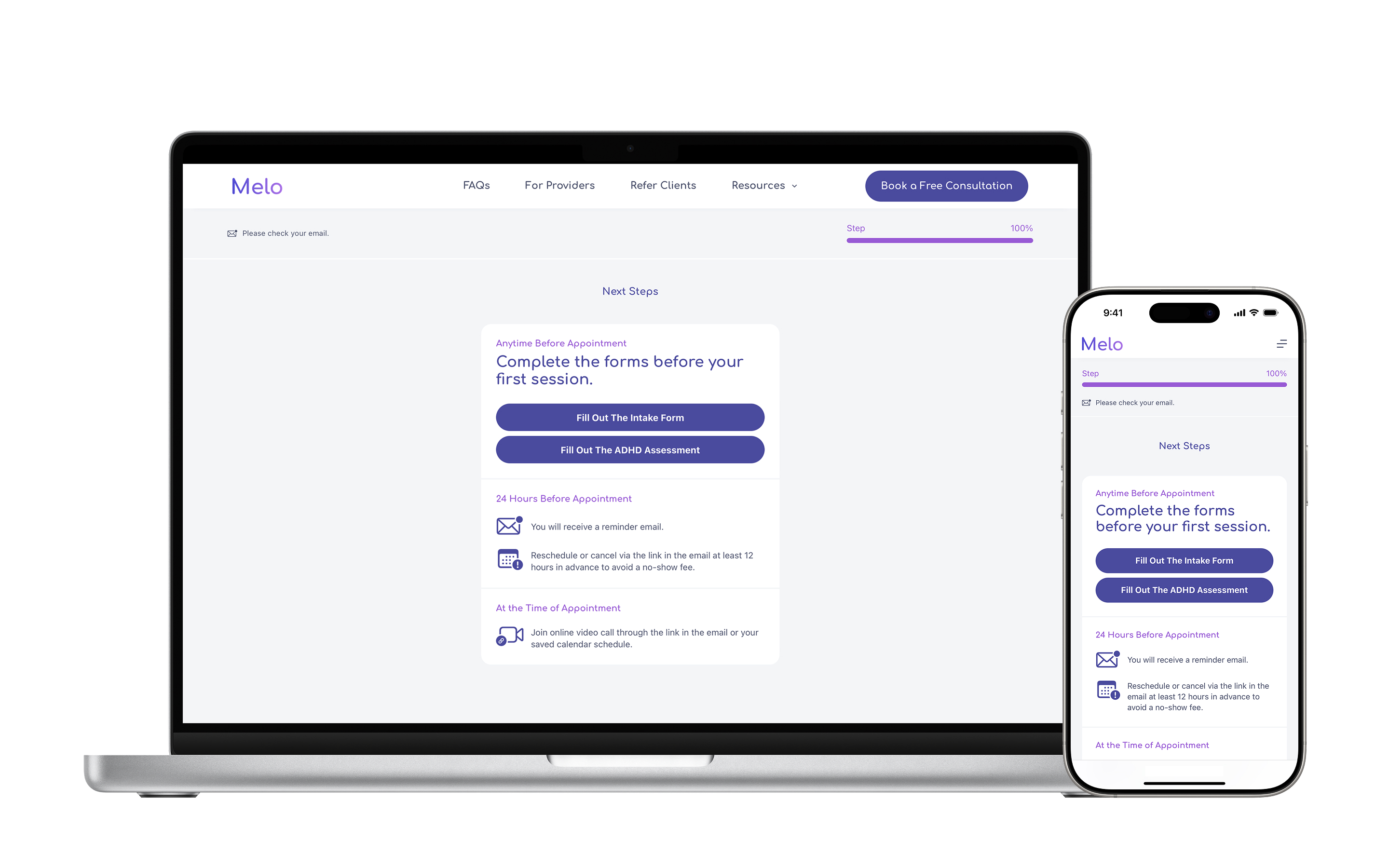
- Post-booking steps (like intake form delivery) had to be triggered manually via email
- Therapist info had to be updated manually, which became error-prone as the list grew
Insights
Behavior changes when information appears sooner.
We wanted to understand why users dropped off so early—and what would motivate them to continue.
After analyzing competitors, we hypothesized: users are more likely to continue when therapists are visible upfront.
To test this, we ran a one-month A/B testing comparing two flows.
Therapists visible after filters
→ Results: lower engagement
7.3% clicked a therapist
0% reached the scheduling step
Therapists visible upfront
→ Results: higher engagement
33.02% clicked a therapist
14.42% reached the scheduling step
With over 400 users in the test, the result confirmed our hypothesis: users didn’t lack intent—they lacked clarity early enough to act.
Define
We reframed the drop-off not as a user problem, but as a visibility problem.
By surfacing therapists earlier, we could shift the decision moment forward—and reduce early drop-off.
Filters made sense to the system. Not to the user.
Users act when they see what matters.
System Redesign
Rebuilt as a system, not just a flow.
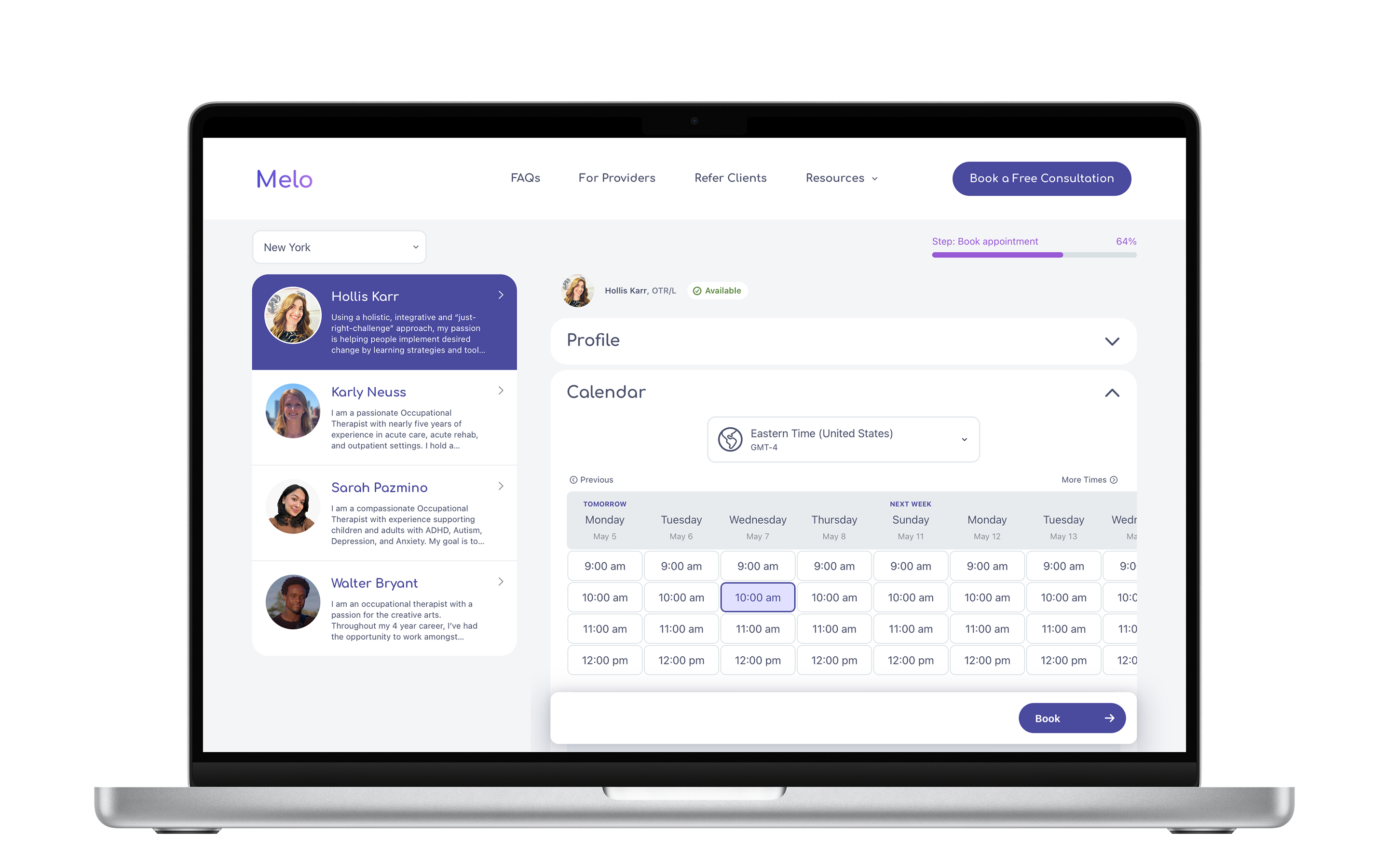
The booking flow was redesigned to bring therapist visibility to the start—reducing early friction and making the path feel intuitive.
Therapist data, availability, and payment are now API-integrated modules—powered by Notion, Acuity, and Square.
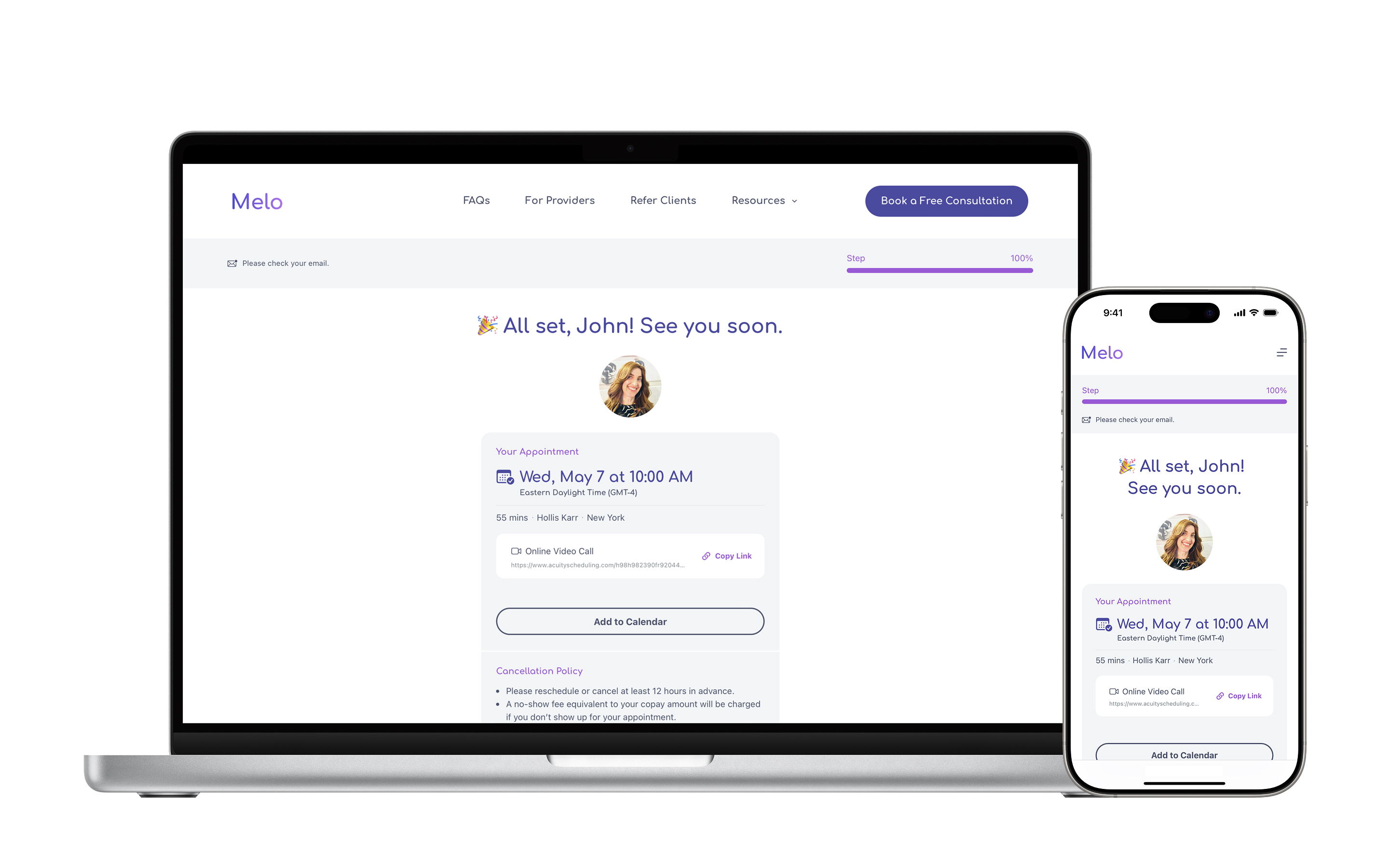
This system replaced the iframe scheduler—making tracking possible, maintaining visual continuity, and reducing manual effort and error risk for Business Operations.
Prototype
I created low-fidelity prototypes in Figma to validate flow logic early.
Prototype Highlights
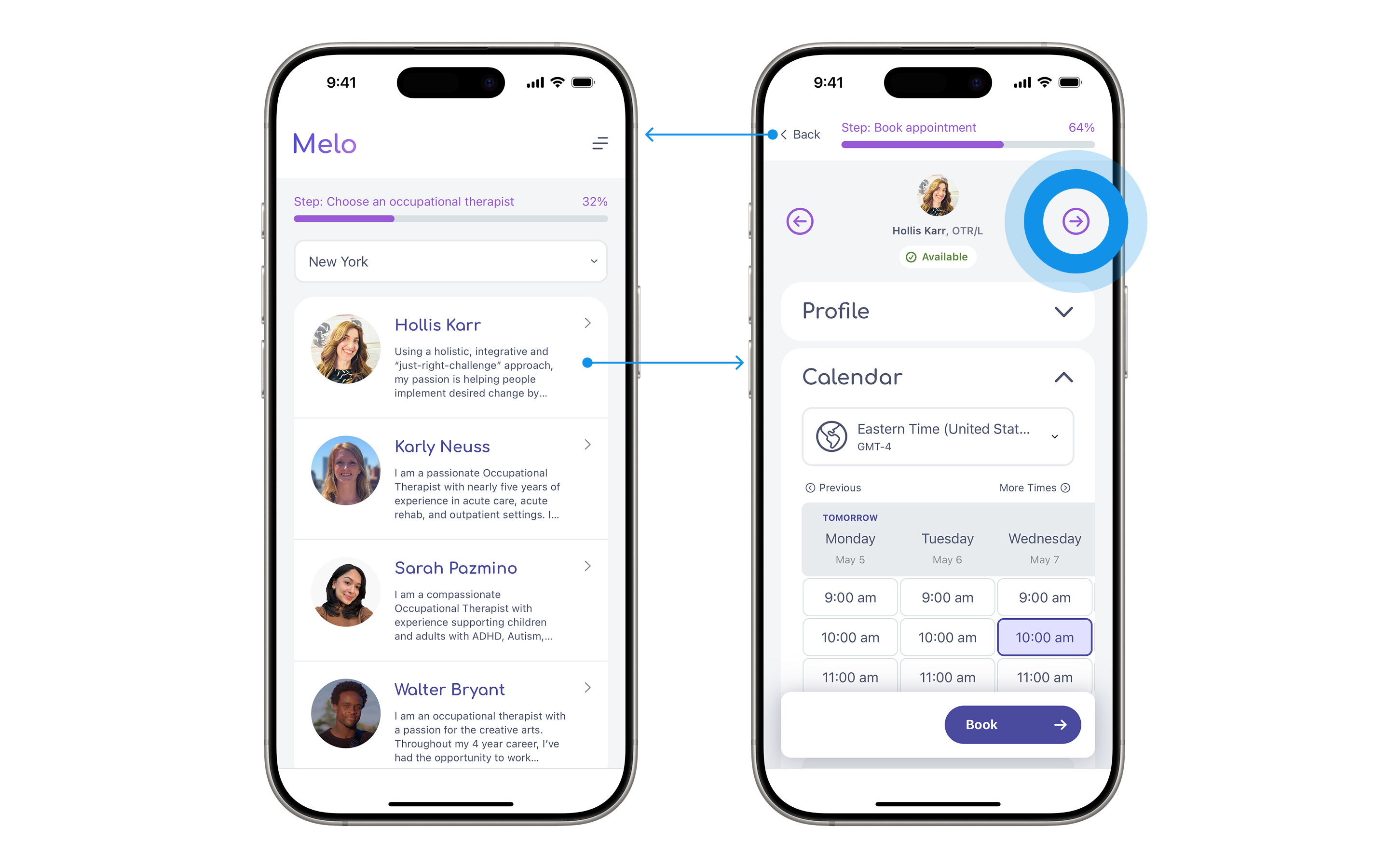
Designed a responsive master-detail structure—preserving context on mobile by letting users switch therapists without leaving the detail view.
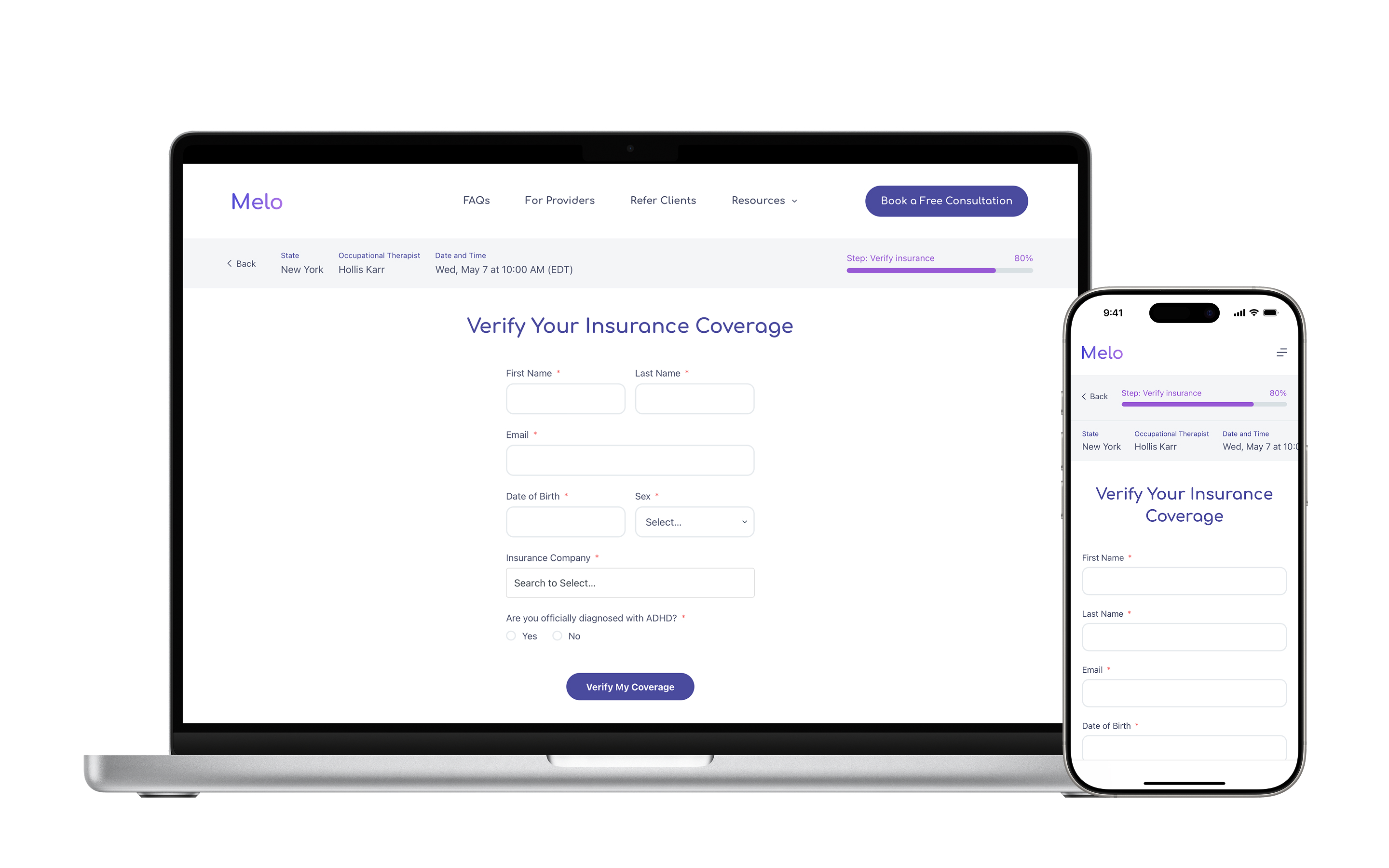
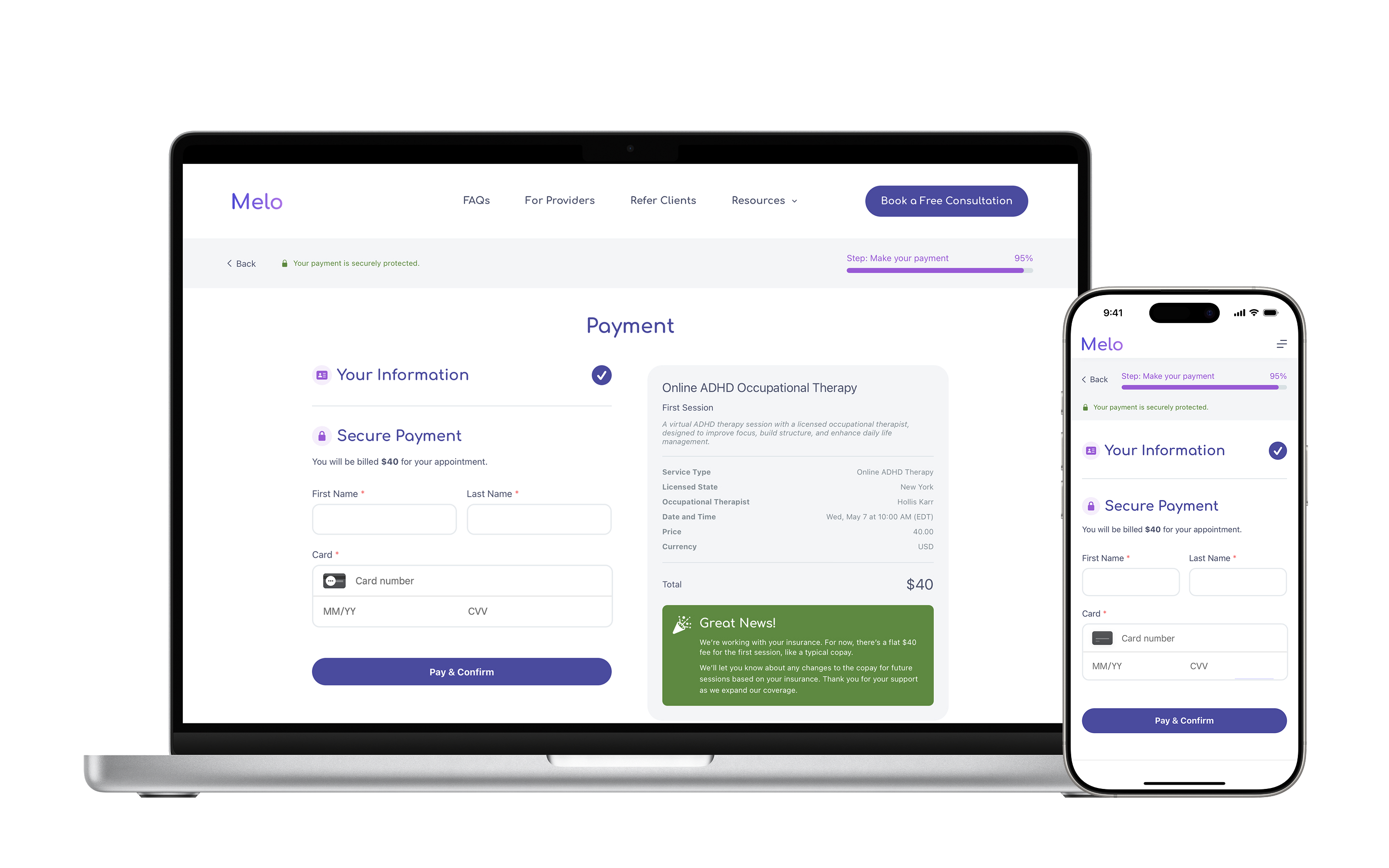
Replaced iframe blocks with custom, API-integrated screens—clarifying the UI, aligning with our brand, and enabling full user behavior tracking.
Balancing Feedback and Judgment
One teammate suggested that the timezone dropdown should auto-select based on user’s IP address.
This is for demonstration purposes only and is not interactive.
But triggering a browser location prompt can feel intrusive—or even break trust, especially in sensitive contexts.
I proposed defaulting to the selected state’s timezone, with manual override—balancing intuition, control, and trust, and aligning with HIPAA’s minimum necessary principle.
User Interface Design
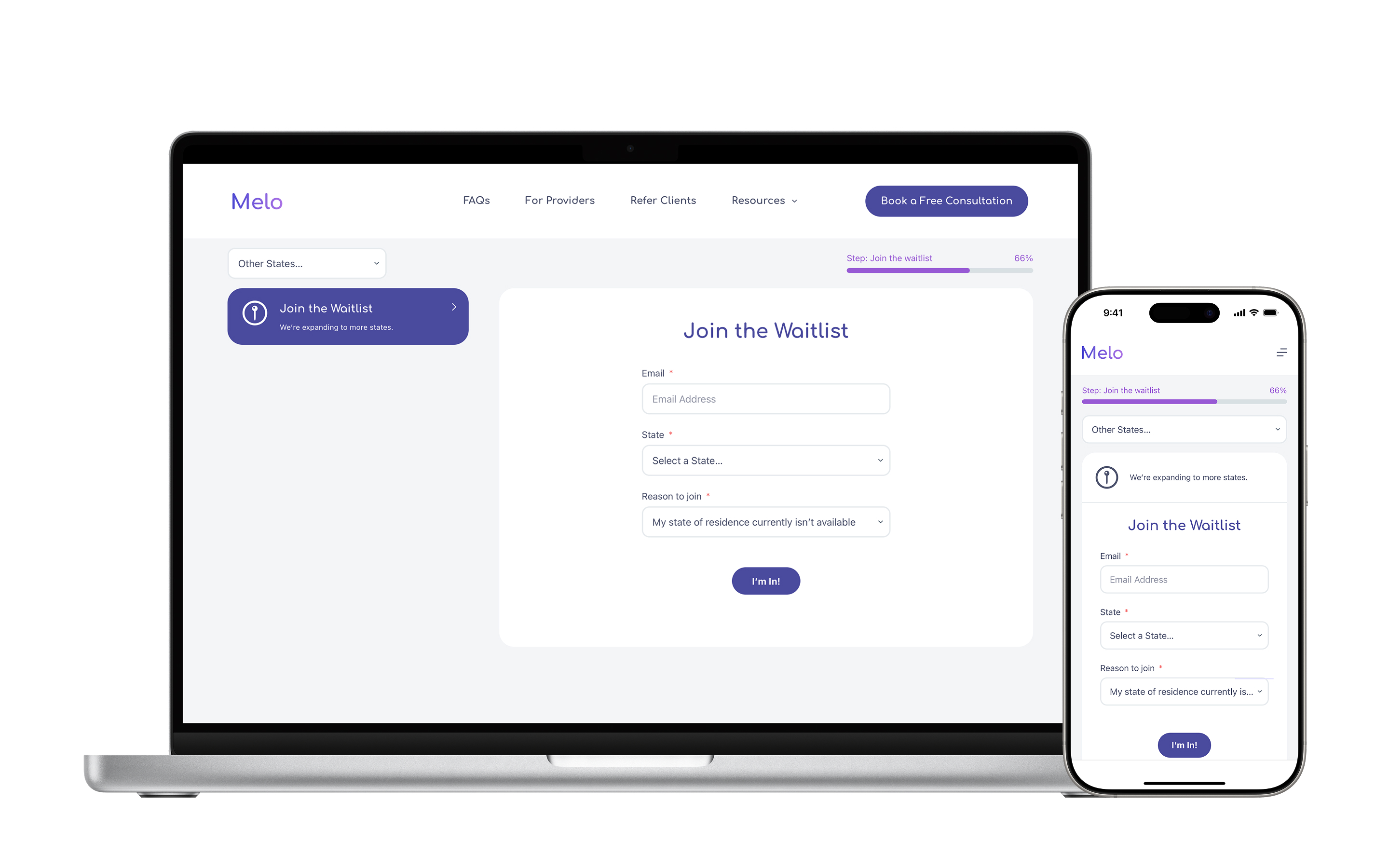
I developed high-fidelity, brand-consistent interfaces in Figma for both desktop and mobile, clearly documenting all interaction states to ensure a smooth handoff to development.







Develop
I built responsive UI modules in WordPress and coded all interactive logic in JavaScript, including:
- Dynamic state-based filtering and therapist list rendering via the Notion Database API
- Calendar integration with the Acuity Scheduling API
- Payment handling through the Square API
- Step-based UI transitions across the booking flow
Front-end system, fully integrated—from UI logic to live data.
Designed a Notion-based CMS for therapist content—API-integrated for real-time updates, avoiding developer overhead and reducing error risk.
Connected Acuity and Square APIs—GET for availability, POST for booking and payment—restyled for a seamless, unified in-product flow.
Integrated Google Analytics 4 and Microsoft Clarity to track user behavior and guide design improvements, with sensitive data masked.
I collaborated with two backend engineers to complete the full system integration—and spoke their language to keep the process seamless—debugging, aligning, and shipping as one team.
Results
In the first 4 months after launch (Dec 2024 – Apr 2025):
- 100% of users could now see available therapists (vs. 14.86% before)
- Booking button click rate rose from 7.3% to 15.21% — a 108.36% increase
- 30.58% of users interacted with the calendar
- Funnel analysis became fully traceable in GA4 and Clarity
- Manual ops tasks were significantly reduced
108.36%
Increase in booking button clicks
Iteration
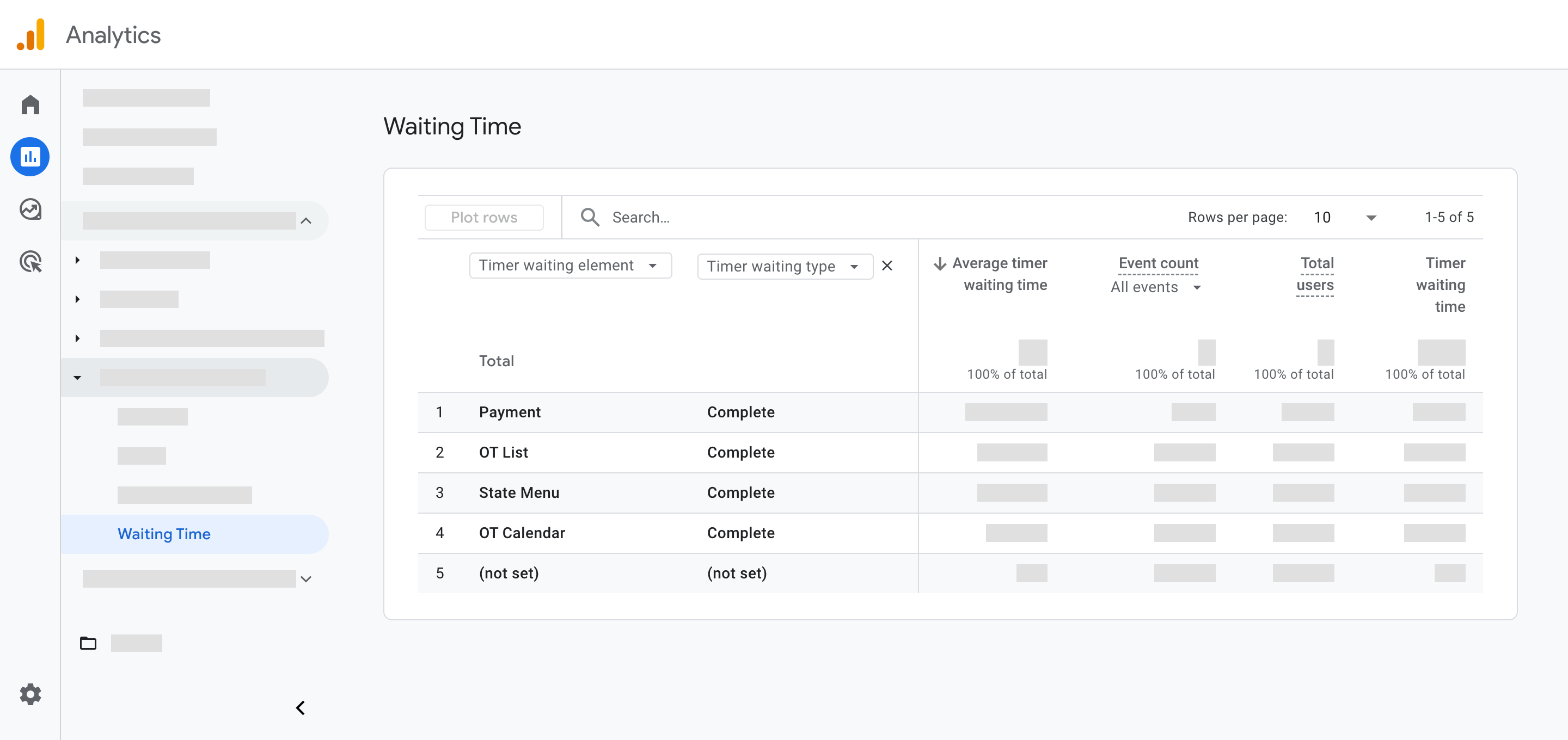
To understand how long users waited for third-party calendar data, I implemented a JavaScript timer that logged API delay as a GA4 custom event. This insight helped us plan a phased data loading strategy for faster perceived performance.

Reflection & Impact
I drove this project from insight to execution—leading product design decisions, crafting UX, and delivering production-ready code. The result was a scalable, branded system that doubled booking engagement and significantly eased operational complexity.
“Thank you for all of your work and dedication in designing and implementing our new website! It’s made a real difference :)”
— CEO, Melo Company (Harvard MBA)